
RAM 2500 & 3500 6.7L Cummins Grid Heater Bolt Failure: Cylinder 6 Destruction, P2609 DTC & Billet Delete Repair Guide
Automotive Research, ASE Master Technicians & Fact-Checking
Direct Technical Summary
Diagnose the catastrophic 6.7L Cummins 'Killer Grid Heater Bolt' defect affecting 2007.5–2024 RAM 2500 and 3500 trucks. Learn how electrical arcing melts the intake grid stud, drops the steel nut into Cylinder 6, and causes sudden engine destruction, plus review TSBs and billet delete upgrades.
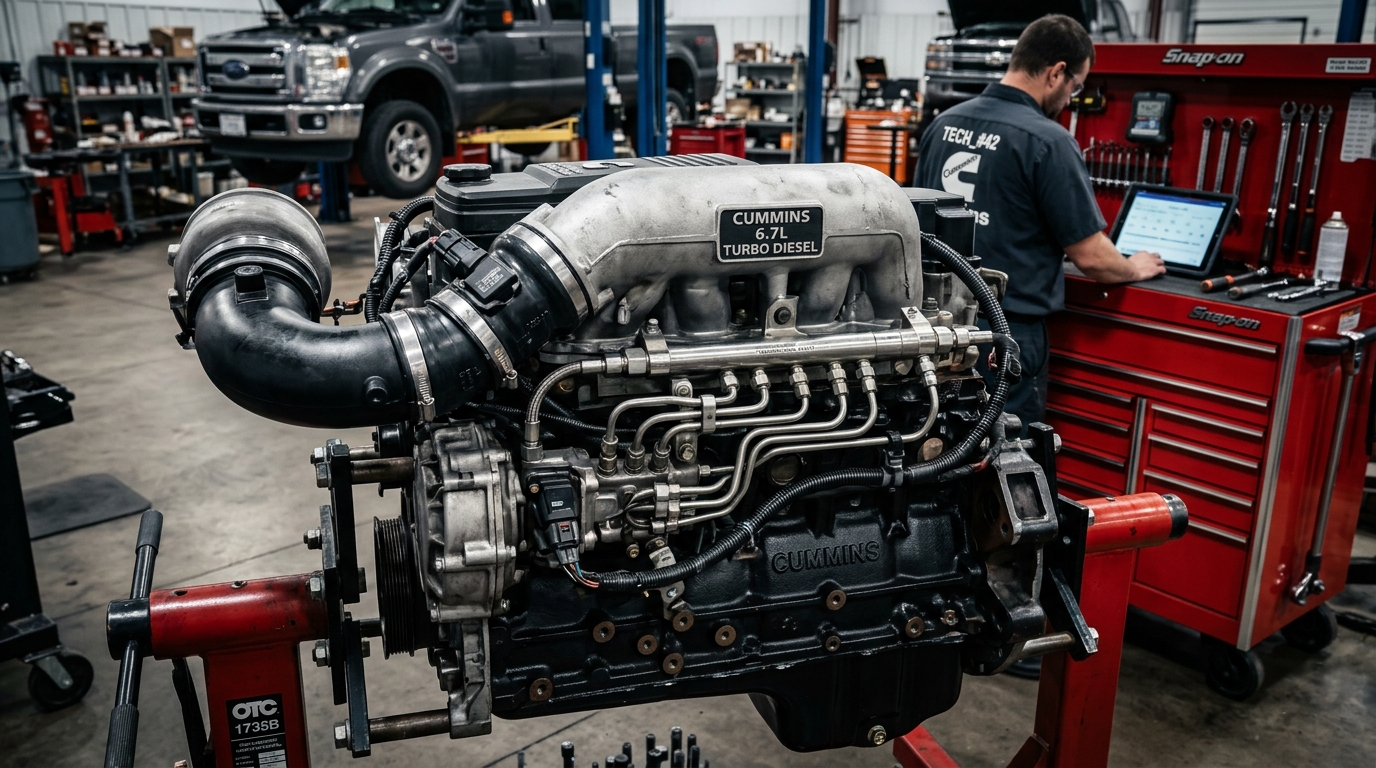
Across heavy-duty diesel platforms, the 6.7L Cummins Turbo Diesel inline-six engine powers millions of RAM 2500, 3500, 4500, and 5500 trucks. Renowned for its cast-iron block durability, immense low-end torque, and commercial workhorse capability, the 6.7L Cummins features a catastrophic design vulnerability known across the diesel service industry as the "Killer Grid Heater Bolt". When an internal electrical stud degrades, a factory steel retaining nut unthreads or shears directly inside the intake manifold plenum, dropping into the Cylinder 6 intake runner and causing catastrophic, instantaneous engine destruction.
Unlike Ford Power Stroke or GM Duramax V8 diesels that rely on individual glow plugs in each cylinder head, Cummins utilizes an open-element intake air grid heater plate mounted directly beneath the cast aluminum intake horn. Powered by a heavy-duty relay drawing nearly 200 Amps of continuous current during cold start heating cycles, the grid heater is designed to preheat incoming intake air down to freezing temperatures. However, repeated thermal cycling combined with low-frequency inline-six engine harmonics causes severe electrical arcing at the internal positive terminal stud, eroding the insulating washer and freeing the steel retaining nut into the high-velocity intake airflow.
Because the intake air stream channels directly toward the rear of the cylinder head, the loose steel hardware is consistently vacuumed into Cylinder #6 (or occasionally Cylinder #5). Within milliseconds, the steel fastener is slammed against the cylinder head by a 17.3:1 compression piston at highway speeds, punching holes in the piston crown, bending valves, scoring the cylinder wall, and cracking the cast-iron cylinder head. Dealership service quotes for a complete 6.7L Cummins long-block replacement routinely reach $14,000 to $18,000. AutoZonic provides the comprehensive forensic diagnostic manual, primary source recall analysis, and permanent billet aftermarket solutions for RAM Cummins owners.
Quick Workshop Diagnostic: 6.7L Cummins Grid Heater Nut Drop at a Glance
- Affected Vehicles: 2007.5–2024 RAM 2500, 3500, 4500, and 5500 Heavy Duty pickups and Cab & Chassis trucks equipped with the 6.7L Cummins ISB6.7 Turbo Diesel engine.
- Mechanical Root Failure: Thermal degradation and microscopic electrical arcing destroy the internal Delrin/ceramic insulating washer on the grid heater positive terminal stud. The retaining hardware loosens and drops into the intake plenum.
- Cylinder Vulnerability: Cylinder #6 sits directly in the aerodynamic drop path of the rear intake plenum horn, making it the primary impact point for ingested fasteners.
- Associated OBD-II DTCs:
P2609(Intake Air Heater System Performance),P0542(Intake Air Heater Circuit High),P0306(Cylinder 6 Misfire Detected once mechanical ingestion occurs). - Official Regulatory Recalls: FCA Safety Recall 67A (NHTSA Campaign 23V-116) addressing intake air heater relay short-circuits and vehicle fire risks, alongside technical service bulletins documenting stud overheating.
- Permanent Engineering Remedy: Installation of an aftermarket billet intake plenum / grid heater delete plate (such as Banks Monster-Ram, BD Diesel, or Pusher Intakes) that completely eliminates the internal drop hazard.
1. Mechanical Root Cause: Why Does the Grid Heater Stud Fail?
To understand why this component fails catastrophically, technicians must examine the physical geometry of the 6.7L Cummins intake plenum. Mounted between the cast intake horn and the cylinder head intake grid cavity, the factory grid heater assembly consists of dual resistive heating coils held within an aluminum housing. Electrical power enters through an external copper terminal stud, passes through an insulating sleeve in the casing, and connects to the heating element bus bar via an internal threaded fastener.
Every time the ignition key is cycled in cold weather, the grid heater system engages in two operational phases: pre-heat (prior to cranking) and post-heat (cycling on and off for up to 3 to 5 minutes after engine startup). During active operation, the circuit draws between 180 and 210 Amps, causing the terminal stud to heat up rapidly from freezing ambient temperatures to well over 600°F to 800°F (315°C to 425°C).

Over tens of thousands of miles, several mechanical factors combine to cause failure:
- Thermal Shock & Insulator Breakdown: The factory composite insulating washer shrinks, cracks, and degrades from extreme temperature swings, creating micro-clearance between the electrical stud and the aluminum housing.
- Continuous Contact Arcing: As clearance increases, electrical resistance spikes at the contact point. The 200-amp current begins micro-arcing across the loose interface, generating localized temperatures hot enough to melt copper and brass.
- Vibrational Loosening: The low-frequency torsional vibrations inherent to a large-displacement inline-six diesel engine back the unbonded internal retaining nut off the degraded threads.
- Vacuum Ingestion: Once the nut or sheared stud drops into the intake channel, the 20 to 35 PSI of pressurized boost air and the high-velocity intake stroke pull the hardware straight into the rearmost intake port: Cylinder #6.

2. Field Diagnostic Protocols & Telemetry: Detecting Stud Degradation Early
Because the internal nut is concealed inside the intake plenum, owners rarely realize the terminal is failing until catastrophic mechanical damage occurs. However, technicians can identify early electrical and thermal warning signs before the fastener completely detaches:
| Diagnostic Parameter & Inspection Point | Healthy 6.7L Cummins Baseline | Degraded Grid Heater Stud (High Drop Risk) |
|---|---|---|
| Positive Stud Terminal Resistance to Ground | Zero continuity (infinite resistance / open circuit) between positive stud and aluminum housing. | Partial short / low resistance (< 2.0 Ohms) indicating melted insulating collar. |
| Terminal Mechanical Play (The Wiggle Test) | Stud is completely rigid; zero axial or radial movement when tested with light finger pressure. | Noticeable rotational play or wiggle; internal retaining nut has backed off threads. |
| Thermal Imaging Temperature at High-Amp Draw | Uniform heat dissipation across the terminal plate below 250°F (121°C). | Severe localized resistance hot spot spiking to 500°F to 750°F+ (260°C to 398°C) at the stud connection. |
| OBD-II Fault Log Telemetry | Clean ECM status; intake air heater cycles without voltage drop alerts. | Intermittent fault code P2609 (Intake Air Heater System Performance) logged during cold starts. |
⚠️ Workshop Field Note: Do Not Clear an Intermittent P2609 Code
If a 6.7L Cummins sets an intermittent diagnostic trouble code P2609, do not assume it is simply a weak battery or a cold-weather glitch. When contact resistance spikes due to arcing at the terminal stud, the ECM detects a voltage drop across the intake grid heater circuit and triggers P2609. In dozens of documented field teardowns, trucks that suffered Cylinder 6 nut ingestion logged P2609 within 500 to 1,500 miles prior to engine failure.
3. Regulatory Actions: FCA Safety Recall 67A & Fire Hazards
In addition to internal engine ingestion, the 6.7L Cummins intake heater circuit poses a documented vehicle fire hazard. In February 2023, Stellantis (FCA US LLC) issued Safety Recall 67A (NHTSA Campaign 23V-116) covering over 306,000 RAM 2500, 3500, and 4500/5500 trucks built between 2021 and 2023.
The safety recall focuses on an electrical short in the solid-state intake air heater relay that can cause continuous current draw even when the ignition is switched off. If the relay sticks in the closed position, the positive terminal stud overheats continuously, creating an underhood fire risk and dramatically accelerating internal stud melting and nut detachment.
While Recall 67A replaces the solid-state relay with an updated electro-mechanical relay to prevent uncommanded heating with the key off, it does not redesign the fragile internal grid heater stud and nut assembly. The mechanical risk of thermal cycling, arcing, and nut ingestion remains active on all 2007.5 through 2024 trucks whenever the heater operates normally.
4. Permanent Engineering Solutions: Billet Grid Heater Delete Options
Because factory replacement grid heater plates feature the same internal stud architecture, installing another OEM plate merely restarts the failure clock. Professional diesel technicians recommend two proven permanent remediation paths:
-
1. High-Flow Billet Grid Heater Delete Intake Horn (e.g., Banks Monster-Ram):
The industry-standard solution replaces the restrictive factory cast intake horn and grid heater with a monolithic billet aluminum casting. By removing the bulky factory heater plate from the airflow path, this upgrade eliminates the drop hazard completely while delivering a tested 80% to 120% improvement in airflow mass into the intake manifold. Many aftermarket units (like the Monster-Ram) incorporate a high-flow vertical coil heater that warms incoming air without placing any threaded fasteners in the runner path. -
2. Billet Heater Delete Plate (Spacers by BD Diesel, Pusher, or Fleece):
For owners retaining the factory intake horn, a solid CNC-machined billet aluminum spacer replaces the internal grid heater block. The plate provides a smooth, unobstructed passage between the intake horn and plenum, completely removing electrical studs, nuts, and heating coils from the engine.
⚠️ Mandatory Cold Start Caveat: Winter Operation Without Grid Heaters
If you operate a 6.7L Cummins in freezing climates (below 20°F / -7°C) and install a complete grid heater delete plate without an auxiliary coil, you must rely on the factory 750-watt engine block heater. Common-rail Cummins diesels with healthy 29,000 PSI high-pressure fuel systems and good cylinder compression will readily fire without grid heaters down to approximately 15°F (-9°C), but pre-heating the engine block via the 110V cord ensures clean cold starts without excessive cranking smoke or white exhaust haze.
Owner Diagnostic & Action Protocol
If you own or service a 2007.5–2024 RAM 2500 or 3500 with the 6.7L Cummins Turbo Diesel engine, follow this proactive inspection and protection plan:
- Perform the Physical Stud Wiggle Check: With the engine turned off and cold, locate the positive electrical lead entering the driver-side intake grid plate. Gently grasp the terminal insulator and test for movement. If the stud wobbles, rotates, or exhibits loose play, the internal retaining nut has backed off and the truck should not be driven until serviced.
- Inspect Terminal Insulator for Heat Discoloration: Look for melting, browning, charred plastic, or black arcing soot around the base of the terminal stud. Discoloration indicates active electrical arcing.
- Scan for P2609 & P0542 Diagnostic Trouble Codes: Use an OBD-II diagnostic scanner to check for pending or stored intake heater circuit codes. Treat any P2609 code as an immediate prompt for visual inspection.
- Verify NHTSA Recall 67A Status: Check your VIN with an authorized RAM dealership to verify whether the 67A intake heater relay recall has been completed to eliminate fire risks.
- Install Billet Delete Protection: To permanently protect your engine against a $15,000 Cylinder 6 rebuild, install a quality billet grid heater delete plate or high-flow intake plenum assembly before severe thermal degradation occurs.
Found this repair guide useful?
Mark AutoZonic as a preferred source and our technical teardowns show up first in your Google results. One click, no account.
Researching this vehicle or comparing used inventory?
Always cross-reference factory service bulletins, verify warranty coverage, and compare dealer financing rates or insurance quotes before purchasing.
Reader Feedback
Was this technical guide helpful?
Your verification vote informs our ongoing automotive research schedule.